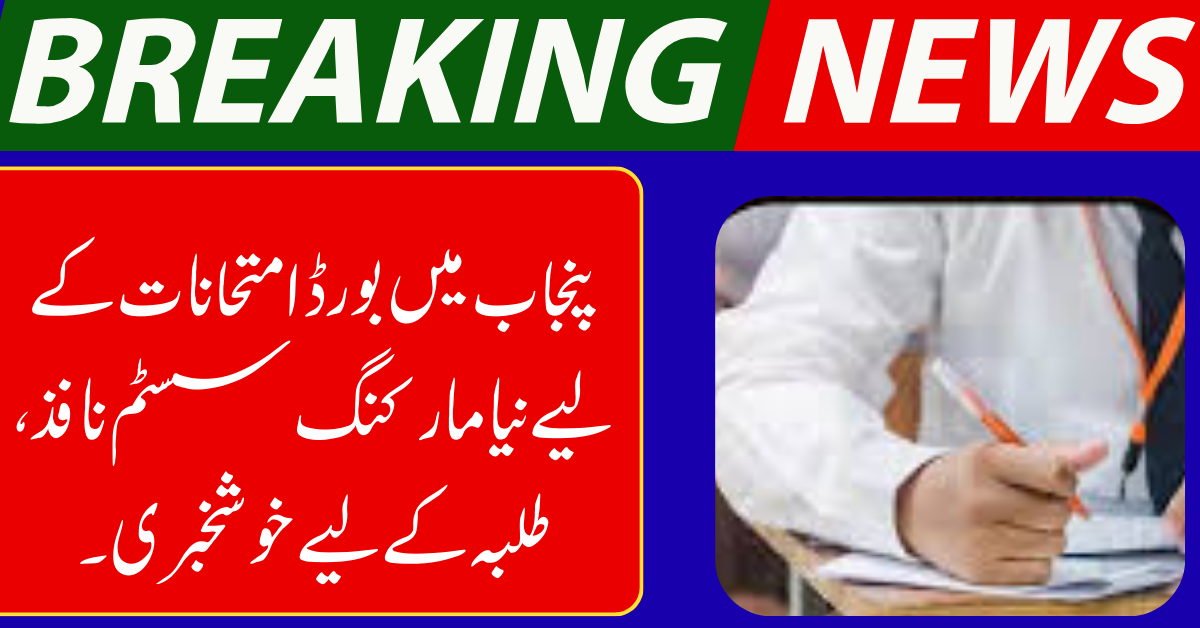
Punjab Board Examination Marking System Explained – How Students Are Assessed
The Punjab Board exam marking system is designed to ensure fair, transparent, and merit-based evaluation for students appearing in Matric and Intermediate examinations. All Boards of Intermediate and Secondary Education (BISE) across Punjab follow a standardised assessment framework approved by education authorities.
How Marks Are Distributed in Board Exams
The marking system focuses on both conceptual understanding and written presentation. Examiners follow official marking schemes issued after paper completion to maintain uniformity.
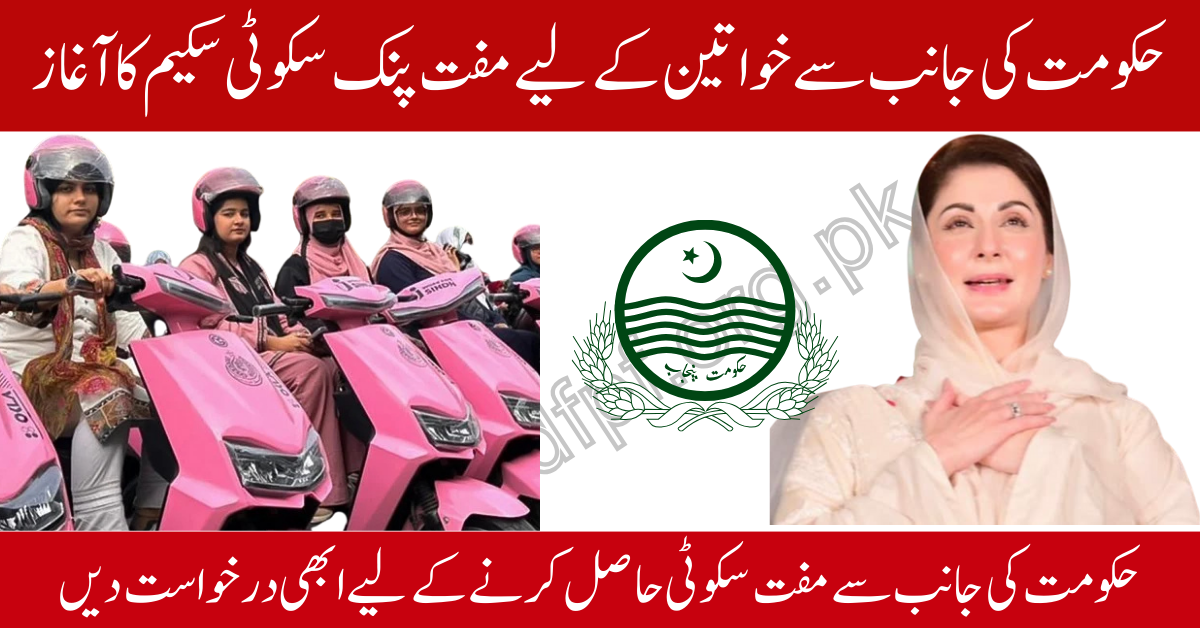
Punjab Launches Pink Scooty Scheme 2026 – Free Scooties for Women to Begin Distribution
The Punjab government has officially initiated the Maryam Nawaz Pink…
How to Check CNIC by Mobile Number in Pakistan 2026
Verifying your CNIC (Computerized National Identity Card) using a mobile…
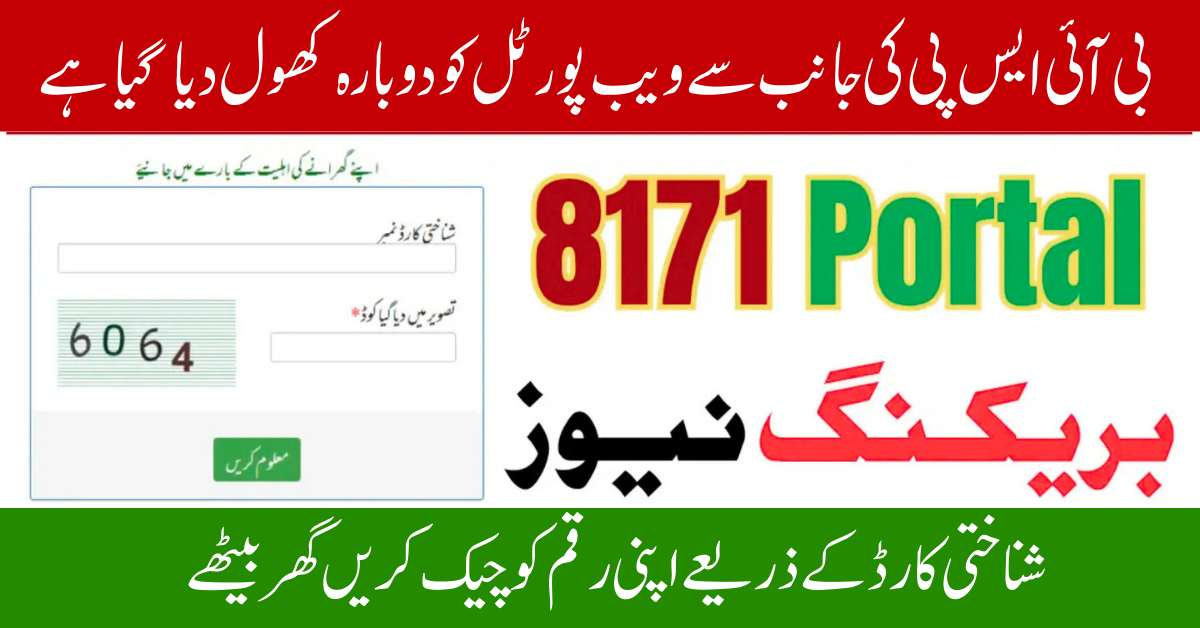
8171 Online Tracking System 2026 – Complete Guide to Verify Your BISP Rs.13,500 Payment by CNIC
The 8171 Tracking Portal is the official online system introduced…
| Assessment Area | Weightage |
|---|---|
| Objective (MCQs) | 20% |
| Short Questions | 30% |
| Long/Analytical Questions | 40% |
| Practical/Assignments | 10% |
Paper Checking and Transparency Measures
Answer sheets are checked by trained examiners under strict supervision. Rechecking and recounting options are available to ensure students’ confidence in results.
Grading and Passing Criteria
Students must secure at least 33% marks in each subject to pass. Grades are awarded based on total marks, influencing college admissions and scholarships.
FAQs
Q1: Is negative marking applied?
No, Punjab Boards do not apply negative marking.
Q2: Can marks be rechecked?
Yes, students can apply for rechecking through their respective BISE.
Q3: Are practical marks compulsory?
Yes, failing practical exams can result in overall failure.
Conclusion
The Punjab Board marking system emphasizes fairness, clarity, and academic standards. Understanding it helps students prepare strategically and avoid unnecessary stress.