

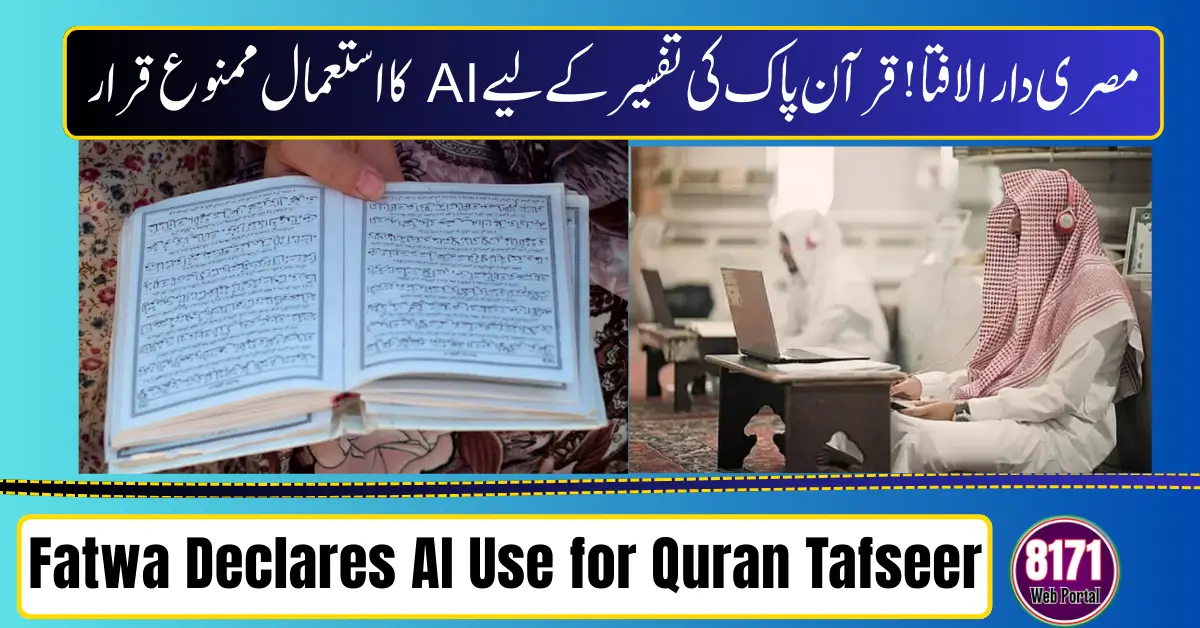
Fatwa Declares AI Use for Quran Tafseer Religiously Impermissible
Egypt’s Dar al-Ifta has issued a landmark fatwa prohibiting the use of artificial intelligence (AI) tools for interpreting or explaining the Holy Quran. The decree responds to growing interest in using AI applications, such as ChatGPT, for religious guidance and Quranic exegesis.
According to Dar al-Ifta, AI lacks the necessary religious training, scholarly authority, and jurisprudential insight required to provide authentic interpretations. Relying on such technology may spread misinformation and incorrect religious understanding.
“Proper understanding of the Quran must come from trusted and experienced scholars to preserve its true meaning,” the fatwa emphasized.
Punjab Launches Pink Scooty Scheme 2026 – Free Scooties for Women to Begin Distribution
The Punjab government has officially initiated the Maryam Nawaz Pink…
How to Check CNIC by Mobile Number in Pakistan 2026
Verifying your CNIC (Computerized National Identity Card) using a mobile…
Punjab Board Examination Marking System Explained – How Students Are Assessed
The Punjab Board exam marking system is designed to ensure…



Why AI Cannot Replace Scholars
| Concern | Explanation |
|---|---|
| Lack of Religious Expertise | AI does not study Shariah, fiqh, or classical tafseer. |
| Risk of Misinterpretation | Algorithms may generate contextually incorrect or misleading content. |
| No Spiritual Insight | AI cannot comprehend the spiritual essence of Quranic verses. |
| Absence of Scholarly Authority | Only recognized scholars and institutions provide credible guidance. |
Dar al-Ifta instructed Muslims to rely solely on well-established Quranic commentaries, respected scholars, and official religious institutions for guidance. The fatwa clearly stated that AI platforms cannot be considered a credible source for Shariah or Quranic interpretation.
Context and Implications
This ruling arrives amid global debates on AI’s role in education, research, and religious practice. While AI offers convenience and instant answers, religious authorities warn that its use in Quranic interpretation could compromise accuracy, authenticity, and spiritual understanding.
Key Benefits of Following Traditional Tafseer
- Ensures accurate understanding of Islamic teachings.
- Prevents misinterpretation and misinformation.
- Preserves the spiritual and ethical essence of the Quran.
- Supports consultation with qualified scholars for guidance.
Conclusion
While AI continues to transform many aspects of daily life, Dar al-Ifta’s fatwa makes it clear that technology cannot replace human scholarship in matters of faith. For authentic Quranic understanding, believers must turn to recognized scholars, traditional tafseer, and official religious institutions.
